


You help children organize knowledge with a brain encyclopedia, providing the best study tips for kids. Children build curiosity and tackle study challenges with engaging questions and answers. Kids develop critical thinking and make decisions using logic and reasoning. Closerout’s "Building the Ultimate Brain Encyclopedia for Children: Why 100,000?" creates fun for families and educators, making learning an enjoyable experience together. Explore the Kids & Family collection and take advantage of promotions like buy 3 get 1 free, $10 off $100+, and free shipping. 📚
Key Takeaways
- A brain encyclopedia sparks curiosity and helps children organize knowledge, making learning enjoyable and effective.
- Encourage family involvement in education to boost children's confidence, participation, and academic success.
- Use engaging activities and open-ended questions to develop critical thinking and problem-solving skills in kids.
What Is a Brain Encyclopedia?
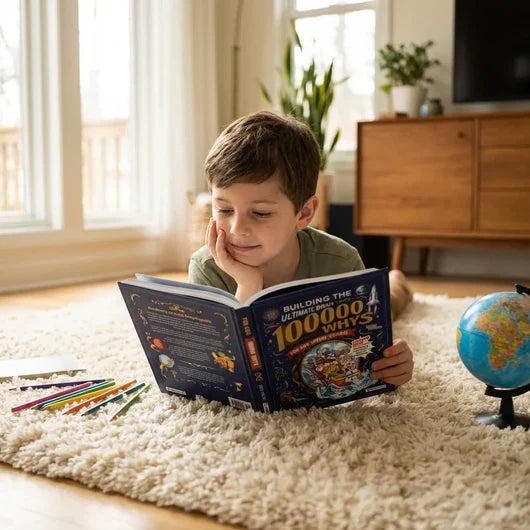
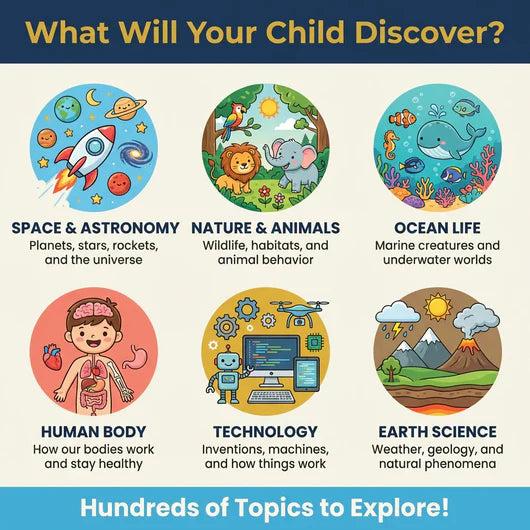
A brain encyclopedia gives you and your children a powerful tool for organizing knowledge in a way that sparks curiosity and supports learning. When you use a resource like Building the Ultimate Brain Encyclopedia for Children: Why 100,000?, you open the door to over 100,000 questions and answers that make even complex topics easy to understand. Children love flipping through colorful illustrations and discovering new facts about science, nature, technology, and more. This format helps children build strong study habits and encourages them to ask questions about the world.
Ignite Your Child's Curiosity!
Discover the joy of learning with 'Building the Ultimate Brain Encyclopedia for Children: Why 100,000?'. Order now and watch your child thrive!
Why Kids Love Learning with Encyclopedias
Kids enjoy encyclopedias because they can explore topics that interest them at their own pace. Each page offers a new adventure, making learning feel like a game. Children often ask "why" about everything, and this encyclopedia gives them answers in a fun, engaging way. You can use it together as a family, turning study time into a bonding experience. The book’s alignment with school curricula means children reinforce what they learn in class, boosting confidence and participation.
Building Curiosity and Thinking Skills
A brain encyclopedia does more than provide facts. It helps children develop critical thinking by encouraging them to connect ideas and solve problems. When children read about how things work, they practice thinking logically and creatively. This process builds curiosity and strengthens critical thinking skills, which are essential for academic success. Many parents notice that children become more eager to learn and more confident in their abilities.
Closerout’s Kids & Family Collection
Closerout’s Kids & Family collection offers a wide range of resources for children and families. You can find books like the Bible Study Workbook for Kids, The Wolf Code, Leadership Academy, Institute of Odd and Strange Research in Physics and Chemistry, and Whitetail, Whitetail, What Do You See?. These resources support children’s learning and growth at every stage. You can also visit the Closerout blog for more ideas and tips.
Tip: Family involvement in education leads to better achievement, attendance, and behavior. Schools with high family engagement see higher test scores and graduation rates.
|
Evidence Description |
Key Findings |
|---|---|
|
A New Wave of Evidence |
Engaging families improves student achievement, attendance, and behavior, and increases graduation rates. |
|
Organizing Schools for Improvement |
Parent involvement is a key ingredient for school improvement in low-income schools. |
|
Community Organizing for Stronger Schools |
Empowering parent leaders contributes to school reform and improvement. |
|
Building Partnerships to Reinvent School Culture |
Schools with high family involvement showed significant gains in student performance on state tests. |
You can take advantage of current promotions like buy 3 get 1 free, $10 off $100+, and free shipping on orders over $39.99. Every purchase comes with a 30-day money-back guarantee, so you can shop with confidence. 🧠
FAQs
Q: How can I use a brain encyclopedia to help my child with homework?
A: Encourage your child to look up questions together. This builds research skills and makes homework more enjoyable.
Q: Is the encyclopedia suitable for different ages?
A: Yes, children of all ages can benefit from exploring topics at their own level and pace.
Best Study Tips for Kids Using a Brain Encyclopedia
Step-by-Step Guide for Parents and Kids
Using a brain encyclopedia effectively can transform study time into an exciting adventure. Start by setting clear learning goals with your kids. Instead of just logging hours, focus on what your child wants to discover or understand. Encourage your child to read questions aloud. Speaking information helps memory retention through the production effect. Make it a habit to explore a few questions each day together or in small groups. Studying with siblings or friends fosters collaborative problem-solving and accountability.
Create a cozy, distraction-free study space where your child can dive into the encyclopedia. Use colorful illustrations and puzzles to keep curiosity alive. After reading, ask your child to explain what they learned in their own words. Teaching others reinforces understanding and builds confidence. Finally, celebrate small successes to keep motivation high.
Boosting Problem-Solving Skills
You can enhance problem-solving skills by turning learning into playful activities. Introduce creative problem-solving games like puzzles, chess, or role-playing scenarios based on encyclopedia topics. These games develop critical thinking and strategic planning. Encourage your child to set challenges, such as finding answers to tricky questions or solving science riddles.
Use storybooks or encyclopedia entries that present real-world problems. Discuss possible solutions together, guiding your child through identifying feelings, defining the problem, and brainstorming ideas. Practical activities like building with blocks or conducting simple experiments also boost cognitive development and problem-solving skills. These hands-on experiences make abstract concepts tangible and memorable.
Encouraging Independent Thinking
A brain encyclopedia supports independent problem-solving by inviting kids to explore topics at their own pace. Encourage your child to ask questions and seek answers without immediate help. This practice nurtures curiosity and critical thinking. When children engage in creative activities, they improve memory and communication skills, which contribute to academic success.
Provide opportunities for your child to reflect on what they learn. Ask open-ended questions like, "What do you think would happen if...?" or "How would you solve this problem?" These prompts stimulate deeper thinking and help kids develop their own ideas. Over time, your child will gain confidence in tackling challenges independently.
Keeping Kids Motivated to Learn
Maintaining motivation can be challenging, but a brain encyclopedia makes learning fun and rewarding. Use problem-solving games and puzzles as breaks between study sessions. Celebrate progress with small rewards or family recognition. Encourage curiosity by exploring topics your child finds fascinating, whether it’s space, animals, or technology.
Set achievable challenges and track accomplishments to build a sense of success. Remind your child that learning is a journey filled with discovery. Adequate sleep and regular breaks also support cognitive function and retention. Remember, active engagement beats passive reading every time.
Leveraging Closerout Offers and Resources
Take advantage of Closerout’s current promotions to build a rich learning environment at home. The buy 3 get 1 free deal and $10 off $100+ offer make it easy to expand your child’s library with diverse resources. Free shipping on orders over $39.99 adds extra value. Explore the Kids & Family collection for books like the Bible Study Workbook for Kids and The Wolf Code, which complement the encyclopedia by fostering leadership and critical thinking.
Visit the Closerout blog regularly for fresh study tips, problem-solving activities, and inspiration to keep your kids engaged and curious. These resources help you create a supportive learning environment that encourages independent and collaborative problem-solving.
Tip: Combine encyclopedia reading with problem-solving games and practical activities to maximize your child’s cognitive development and academic success. 🎯
FAQs
Q: How can I help my child develop independent problem-solving skills using the encyclopedia?
A: Encourage your child to explore questions on their own first. Ask open-ended questions to stimulate thinking and praise their efforts to find answers independently.
Q: What are some fun problem-solving games to play with kids?
A: Try puzzles, chess, role-playing scenarios, and creative problem-solving games that challenge kids to think critically and strategize solutions.
📚🧩
You help children grow when you build a brain encyclopedia habit at home. Children gain improved memory, curiosity, and confidence. Kids also develop strong problem-solving skills. Explore Closerout’s resources, the Kids & Family collection, and current offers. Visit the Closerout blog for more ideas. Start today and watch children thrive! 🚀
FAQ
How can I make encyclopedia study time more fun for my child? 🎉
Use colorful illustrations and ask your child to explain answers aloud. Turn questions into games or challenges to keep learning exciting.
What if my child struggles to find answers alone? 🤔
Encourage them to try first, then guide gently. Ask open-ended questions to boost thinking without giving direct answers.
Can the brain encyclopedia help with school projects? 📚
Yes! It offers clear explanations and facts that support research, helping your child create strong, confident presentations and reports.


